Festive shopping for children often starts with one simple thought: “What should my child wear this time?” Then come the practical questions. Is the outfit comfortable enough for several hours? Will it suit the weather? Can the child move freely? Does it need special care? Will the size still work on the day of the celebration? A well-planned kids festive shopping checklist India parents can actually use should answer these questions before the shopping begins. The aim is not simply to buy attractive clothes, but to build a practical celebration wardrobe that works for festivals, family gatherings, school events and special occasions.
Festive shopping can become surprisingly complicated when several occasions fall close together. A child may need an outfit for a school celebration, another for a family gathering and something more traditional for a festival day. Buying everything at once without a plan can result in duplicate styles, unsuitable fabrics, incorrect sizes or outfits that children refuse to wear because they are uncomfortable.
A festive shopping checklist gives parents a simple framework. Instead of choosing clothes based only on colour or appearance, parents can consider the occasion, weather, fabric, fit, comfort, styling, footwear and future usability. This is especially useful when shopping online because product photographs do not always communicate fabric weight, garment construction or actual sizing.
The best approach is to think about the child’s complete needs before adding products to a shopping cart.
Before buying anything, list the occasions coming up over the next few weeks. Include family celebrations, school functions, cultural events, weddings, religious gatherings and festive photographs.
Then decide whether one outfit can work for more than one occasion. A simple kurta set, for example, might be styled differently for a family lunch and a festival gathering. A girl’s festive dress may also work for a birthday or another celebration when paired with different accessories.
This approach helps reduce unnecessary purchases while making the child’s wardrobe more versatile.
Traditional kids wear can range from simple cotton kurtas and dresses to more elaborate festive ensembles. The right choice depends on the occasion, child’s age, weather and how long the outfit will be worn.
For younger children, comfort should generally take priority over complicated styling. A heavily layered outfit may look attractive in photographs but become uncomfortable during several hours of sitting, eating and playing. Older children may be more willing to wear structured or detailed garments, particularly when they have some involvement in choosing the design.
Parents should also examine construction details. Check the neckline, sleeve openings, waistband, closures and inner lining. These small features can determine whether a garment remains comfortable throughout a long celebration.
Children rarely stay still during celebrations. They run between relatives, sit on the floor, play with cousins and move from one activity to another. An outfit should therefore accommodate normal movement.
Before purchasing, think about:
A festive outfit should look special without turning ordinary movement into a challenge.
Searching for ethnic dresses kids can produce a wide variety of designs, from traditional silhouettes to modern interpretations of Indian clothing. Parents may be drawn towards elaborate embroidery, sequins, layered skirts and decorative borders, but the child’s preferences should also be considered.
A child who dislikes stiff fabrics or heavy embellishments is unlikely to enjoy wearing an elaborate outfit for several hours. Likewise, a younger child may prefer a lightweight dress that is easy to put on and remove.
Ask children for input where appropriate. Giving them two or three suitable choices can make the shopping process easier. They get some control over the final outfit while parents can still manage practical considerations such as fabric, fit and budget.
Not every festival requires the same level of dressing. A daytime family celebration may call for breathable, lightweight clothing, while an evening function may allow for slightly more detailed styling.
A school event can require something particularly comfortable because the child may wear it for several hours. A family wedding may justify more decorative clothing because photographs and formal activities are likely to be part of the occasion.
Thinking about the event first helps prevent buying clothing that looks beautiful but does not suit the actual setting.
Seasonal fashion should be an important part of children’s festive shopping. India’s climate varies significantly between regions and seasons, so the same outfit may not be equally comfortable everywhere.
During warmer periods, lightweight and breathable materials can be more practical. Cotton is often considered for children’s everyday clothing because of its familiar, breathable feel. During cooler months, parents can consider layered outfits or fabrics that provide more coverage.
However, fabric alone does not determine comfort. Lining, garment thickness, embroidery, fit and the number of layers can all affect how warm an outfit feels.
Cotton festive wear can be a useful option when parents want traditional styling without excessive weight. Cotton kurtas, dresses and coordinated sets can work well for daytime celebrations, especially when the event involves outdoor activities or extended travel.
Before buying, check the product description for fabric composition. “Cotton” can refer to different fabric constructions, and blended garments can have different characteristics from pure cotton. Care instructions are also important because some festive garments may shrink, fade or change texture if washed incorrectly.
For children with sensitive skin, parents may also want to consider how decorative elements and inner seams contact the skin.
A celebration wardrobe does not need to contain a large number of festive outfits. A smaller selection of versatile clothing can often provide more value than several highly specific pieces.
For example, a child’s festive wardrobe could include:
The idea is to create combinations that can be reused. Changing footwear, accessories or layering pieces can give an existing outfit a different appearance without buying an entirely new set.
Children grow quickly, so a festive outfit that is worn only once may have limited practical value. Before buying something expensive or highly specialised, consider whether the child could wear it again.
A classic colour, comfortable fit and relatively simple design can make an outfit easier to reuse. Parents can also photograph the outfit combinations they create, making it easier to remember how different pieces can be styled for future occasions.
This is particularly useful for families with several celebrations throughout the year.
Shopping for festive kids wear online India collections can save time, but online purchases require careful checking. A product photograph cannot tell you everything about a garment.
Always examine the product description, size chart, material information, care instructions and return policy before ordering. If customer reviews are available, look specifically for comments about sizing and fabric rather than focusing only on overall ratings.
Age labels can be helpful, but they are not always reliable indicators of fit. Children of the same age can have very different heights, body proportions and growth patterns.
Take current measurements according to the retailer’s instructions and compare them with the product’s size chart. For dresses, check chest and length measurements where available. For coordinated sets, also consider waist and sleeve measurements.
Avoid buying significantly oversized clothing simply because you expect the child to grow. Excess fabric can change the intended shape and make the outfit difficult to manage during an event.
A useful kids ethnic clothing guide should focus on more than appearance. Parents should inspect how the garment is constructed and whether it suits the child’s age and activities.
Look at:
Fabric: Consider breathability, weight and suitability for the season.
Fit: Make sure the child can sit, walk, bend and play comfortably.
Fasteners: Check whether buttons, zippers, hooks or ties are practical for the child.
Decoration: Look for securely attached embroidery, beads, sequins and other embellishments.
Lining: Check whether the inner layer is smooth and comfortable.
Care: Make sure the required washing method fits your household routine.
These details may seem minor when shopping, but they can make a major difference once the child actually wears the outfit.
Festive clothing is often planned carefully while footwear is treated as an afterthought. This can be a mistake.
Children may spend several hours standing or walking during celebrations. New shoes can cause rubbing or discomfort, particularly when worn for the first time. If possible, allow children to wear new footwear briefly before the event so parents can identify potential problems.
Comfortable footwear can also prevent an otherwise enjoyable celebration from becoming unpleasant.
Cultural outfits can be an important part of family celebrations because clothing often forms part of how traditions are shared with children. Parents may choose garments that reflect regional, family or cultural preferences while adapting the styling to suit the child’s age and comfort.
There is no requirement for every festive outfit to be highly elaborate. A simple traditional garment can still look appropriate when paired with suitable accessories and colours.
Parents can also use festive clothing as an opportunity to involve children in conversations about the occasion. Explaining why certain colours, patterns or garments are traditionally worn can make the experience more meaningful than simply purchasing a new outfit.
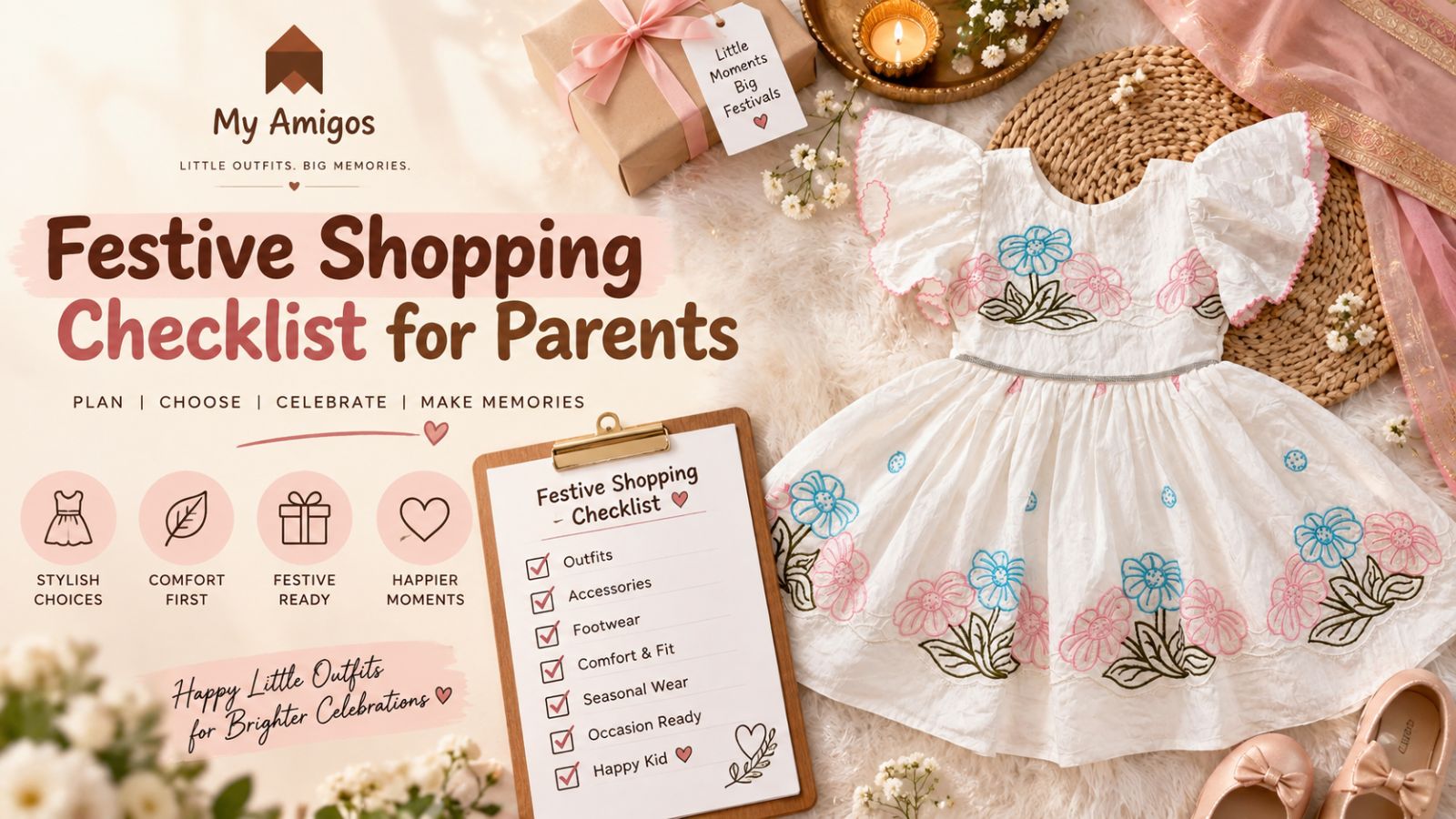
Before finalising your purchases, use this checklist to review each item:
Trying the entire outfit together before the event is one of the simplest ways to identify problems. A dress may fit well, but the combination of footwear, accessories and layers may still make movement difficult.
One common mistake is buying too close to the celebration date. Last-minute shopping leaves less time for exchanges, alterations or size changes. Ordering earlier provides a useful buffer if the garment does not fit as expected.
Another mistake is choosing appearance over practicality. Elaborate designs can be attractive, but children may become uncomfortable if the outfit is heavy, stiff or poorly ventilated.
Parents may also underestimate the importance of care instructions. Some festive garments require delicate handling, and discovering this after purchase can be inconvenient if the outfit needs to be cleaned quickly before an event.
Price can reflect fabric, craftsmanship, brand positioning and decorative work, but a higher price does not automatically mean a garment is better for a particular child.
Instead of judging quality solely by cost, look at the actual construction, fabric, finishing and usefulness. A moderately priced cotton outfit that a child can wear repeatedly may offer more practical value than an expensive garment that is worn once.
The right purchase is the one that meets the child’s needs and the family’s circumstances.
Experienced parents often discover that preparation saves more time than browsing through endless product choices. Start with the occasion, then narrow the selection based on weather, fabric and comfort.
A useful approach is to create three categories: must-have, useful and optional. The main festive outfit may be a must-have. Matching footwear could be useful if existing shoes are unsuitable. Extra accessories might be optional.
This approach prevents small styling details from taking over the shopping process.
Another practical tip is to keep an emergency kit available during longer celebrations. For younger children, this could include wipes, a spare outfit, hair accessories and comfortable backup footwear. These simple preparations can be particularly helpful when travelling to weddings or family gatherings.
Parents exploring children’s festive clothing can use this festive shopping checklist as a practical framework when comparing different collections. My Amigos focuses on children’s clothing options that can be considered alongside factors such as fabric, fit, styling, occasion and everyday comfort.
The goal should always be to choose clothing that works for the child rather than buying simply because an outfit looks impressive online. Checking measurements, materials and garment details before ordering can make the shopping experience more predictable.
The most useful kids festive shopping checklist India parents can follow is one that balances tradition, comfort, practicality and personal preference. Start with the occasion, understand the weather, choose suitable fabrics, measure carefully and think about how often each garment can be worn.
A well-planned festive wardrobe does not need to be oversized. A few thoughtfully selected pieces can cover family celebrations, cultural events, school functions and special occasions while allowing children to remain comfortable.
My Amigos can be considered by parents exploring festive children’s clothing as they build their seasonal wardrobe. Whether the requirement is a simple traditional outfit or something more occasion-focused, comparing fabric, fit, construction and care details remains the most reliable way to make a confident purchase.
Parents should first consider the occasion, weather and child’s comfort. After that, check fabric, measurements, sizing, construction, closures and care instructions. The child’s normal activities during the event also matter. If they will be walking, playing or sitting for several hours, the outfit should allow comfortable movement rather than simply looking attractive in photographs.
Cotton can be a practical choice for many warm-weather celebrations because it is generally lightweight and breathable. However, parents should consider the specific fabric construction, lining and decorative details rather than assuming every cotton garment will feel the same. For an outdoor or daytime celebration, lightweight cotton clothing may be particularly useful, while cooler evenings may call for additional layers.
Use the child’s current measurements rather than relying only on age. Compare those measurements with the retailer’s size chart and pay attention to garment length, chest, waist and sleeve measurements where available. Ordering significantly larger clothing can make an outfit difficult to manage, while buying too close to the child’s current measurements may leave little room for growth.
There is no fixed number because requirements depend on the family’s calendar and how often the child attends celebrations. A small collection of versatile outfits can be more practical than purchasing something new for every event. Parents can prioritise one comfortable everyday ethnic outfit, one formal festive option and pieces that can be restyled with different accessories.
Choosing an outfit based entirely on appearance is one of the most common mistakes. Product photographs do not always show fabric weight, actual fit, lining or construction. Parents should read the complete description, check measurements, review customer feedback and understand the return policy. Most importantly, they should consider whether the child will genuinely be comfortable wearing the outfit for the full duration of the celebration.