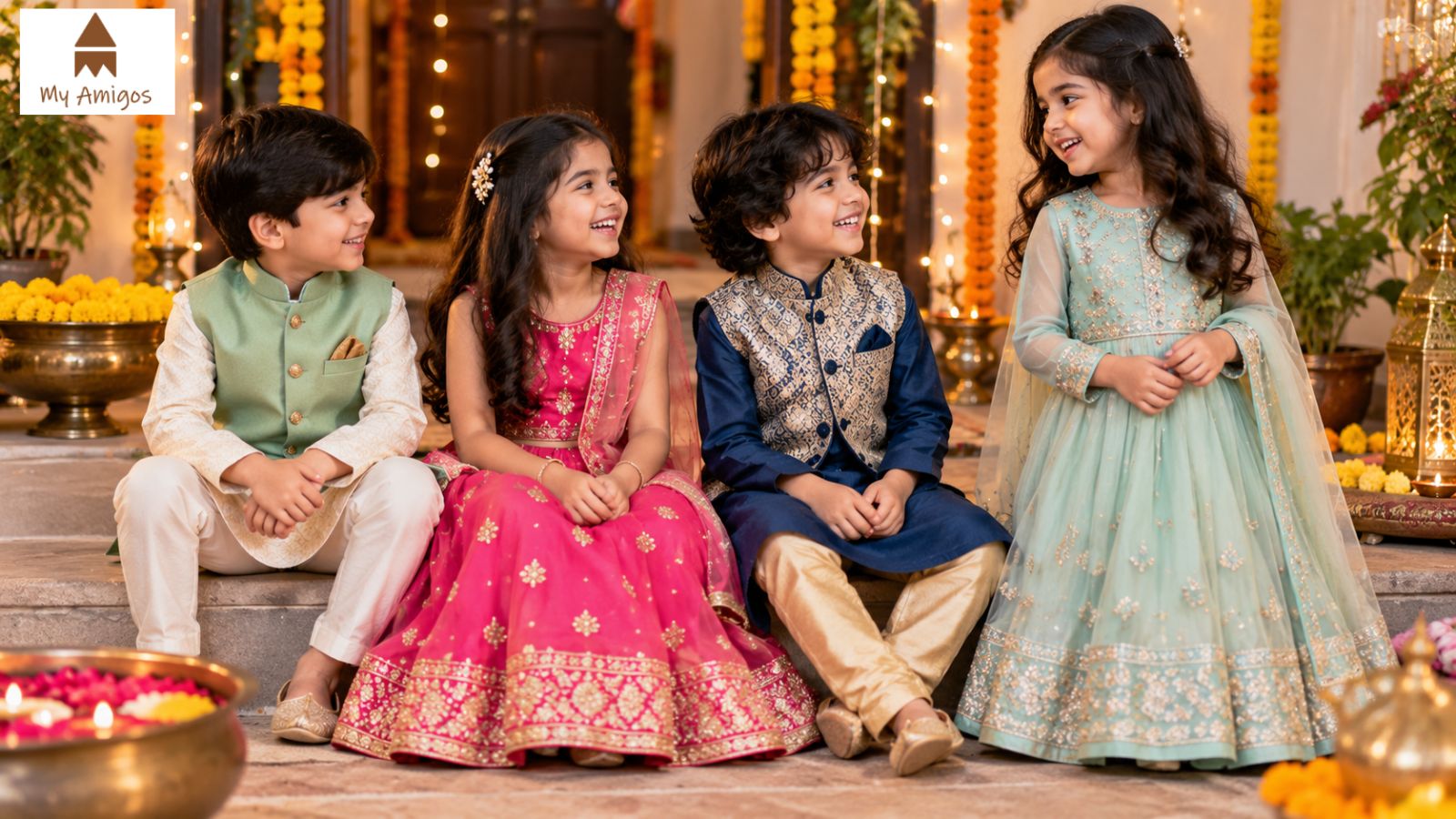
Dressing up kids for any celebration is a delight but also comes with multiple challenges in choosing the right outfits that don’t compromise comfort. Whether it is Diwali, Eid, Navratri, Pongal, Christmas, or a family wedding, kids demand extra attention when choosing ethnic festive wear. For such occasions, you need festival dresses for kids.
Unlike adults, children will not hesitate to inform you about itchy or uncomfortable outfits. So here is everything you need to know while choosing the right kind of festive wear for your kids. This blog will tell you how to choose festive wear for kids.
When shopping for kids’ festive wear, comfort is of utmost importance. In this kids’ ethnic wear buying guide, you will get to know that the last thing you want is your kid to sulk and complain about the dress you chose for them to wear. To avoid this, prioritize soft and stretchy fabric while shopping.
Other comfort-centric points to consider while shopping for festive wear for kids:
Lightweight sequins, thick borders, and heavy skirts can weigh a child down. So skip heavy embroidery and opt for light patterns or foil prints that give the appearance of heavier work.
Light fabric does not cause irritation, trap sweat, or irritate the delicate skin of your kids. So choose light fabric with cotton or silk lining for kids’ formal festive wear. Know the fabric types that are best suited for kids’ festive wear
Kids’ festive wear buying guide prioritizes the selection of fabrics. The fabric of kids’ festive wear plays an important role in their overall comfort. Since most events require kids to stand for extended periods of time or even run around during summer, selecting the right fabric is of utmost importance.
| Fabric Type | Best Suited For | Advantages |
| Pure Cotton | Daytime & summer rituals | Breathable, lightweight, and suitable for sensitive skin |
| Cotton-Silk | Formal evenings | Soft and comfortable, with a smooth and radiant finish |
| Soft Chanderi | Festivals & rituals | Lightweight, elegant, and comfortable for long ceremonies |
| Linen | Minimalistic outfits | Crisp, breathable ethnic wearand highly absorbent |
Avoid using heavy net for kids’ clothing, especially at the upper body parts, since it can cause irritation if not lined with delicate fabric. Similarly, avoid using raw silk or heavy velvet fabric for kids’ clothing since these tend to cause discomfort as well. Heavy velvet fabric should only be used for winters or outdoor events.
Kids’ festive wear for girls includes a wide range of options from traditional outfits to Indo-Western outfits. In the kids’ ethnic wear buying guide, you will see that there is a variety of clothing available for girls.
Girls’ Festive Outfit Styles Description
Lehengas are a staple ethnic outfit for women during festivals. So when shopping for lehengas for girls, look for stitched lehengas with light flares and elasticated waists. Avoid choosing lehengas with long trail skirts, as they can weigh the child down and cause discomfort. Choose a lehenga crop top or peplum top instead of a regular top to avoid discomfort and ensure unrestricted movement.
Similar to churidars, sharara flare pants fit tightly on the knees and flare out from the thighs, leaving more room for movement. So girls’ sharara suits are a great option to consider when shopping for festive wear for girls.
Girls’ Anarkali suits with floor-length and knee-length flared dresses are a comfortable option when shopping for kids’ festive wear.
Indo-western outfit options for girls include pre-stitched drape dresses, peplums with flared pants, ethnic gowns, and more.
Boys’ ethnic outfits have evolved by leaps and bounds over the years. From plain cotton pyjamas and kurtas, boys’ festive wear now includes a wide range of stylish and comfortable outfits.
Classic kurta pyjamas in cotton or cotton-silk are perfect for boys’ formal festive wear. Choose straight pyjama pants or a kurta with soft cotton pyjamas instead of churidars.
Nehru jackets are a perfect addition to any boy’s outfit. Pair a Nehru jacket with a plain or printed kurta for an ethnic look, and pair a formal jacket with a kurta for a western look.
Since kids like to run around, a Nehru jacket set is comfortable enough to suit their needs during festive events. When putting on a Nehru jacket set, fasten the belt around the waist to keep it in place.
Dhoti pant sets are a popular ethnic outfit; however, they are difficult to maintain for active kids. Choose pre-stitched dhoti sets with elastic waistbands for kids.
Asymmetric tunic sets, peplum tops and flare pants sets, or ethnic gowns are all great Indo-Western outfit options for boys.
Kids’ needs change as they grow, and so should their festive wear.
Infants & Toddlers: 0-2 years Easy to change outfits, cotton clothes with soft interiors, minimal choking hazards
Young children: 3-7 years Easy access to the restroom, no restrictions on movement
Tweens: 8-12 years More fashionable outfits, Indo-Western gowns & structured jackets, allow them to choose their outfits
Kids’ age group plays an important role in choosing the right festive wear. Comfort clothing for toddlers requires easy access to the bathroom and minimal discomfort. Choose snap-out rompers or front-opening kurta and shorts sets for toddlers. Avoid buying outfits with ties, hanging beads, and strings around the collar, and more. Kids’ age group plays an important role in choosing the right festive wear.
Clothing for toddlers requires easy access to the bathroom and minimal discomfort. Choose snap-out rompers or front-opening kurta and shorts sets for toddlers. Avoid buying outfits with ties, hanging beads, and strings around the collar, and more. Kids’ age group plays an important role in how to choose festive wear for kids.
Clothing for toddlers requires easy access to the bathroom and minimal discomfort. Choose snap-out rompers or front-opening kurta and shorts sets for toddlers. Avoid buying outfits with ties, hanging beads, and strings around the collar, and more.
When shopping for Indian festivals, you must consider multiple other factors as well.
Diya lighting events, fireworks displays, and food stalls are a common sight during festivities. Hence, extra care should be taken while choosing festive wear for kids to avoid any mishaps.
When you follow the kids’ ethnic wear buying guide, you need to focus on the footwear too. The right festive wear is incomplete without choosing the right footwear. However, many parents overlook this part and end up putting their child in uncomfortable shoes. Choose comfortable footwear that prevents blisters and slipping on smooth floors for your child during festivities. The following are some of the best footwear options for festive wear:
Now you have a clear idea of how to choose festive wear for kids. Pair festive wear with a matching cardigan set or a velvet jacket set. Thermal undershirts also work well with layering. Avoid layering heavy necklaces and long earrings, as they can cause discomfort to the child. Instead, choose light bangles, hairbands, and clip-on hair accessories.
Always purchase festival dresses for kids one size bigger to allow for extra room and reduce discomfort. Avoid wearing heavy necklaces to avoid breaking the chain or strangling yourself.
Kids’ ethnic wear with heavy embroidery or silk mixed outfits must be dry cleaned or hand washed with cold water and mild soap. Carefully store your kids’ ethnic wear in cotton garments to protect the outfit from getting damaged or caught.
Coconut oil or candle wax must be applied to the inner side of the leather jutis a couple of days prior to their use in order to make them soft. Alternatively, you can add silicone heel grips inside the jute or put on thin socks while wearing mojris.
Mint green, pastel pink, lemon yellow, sky blue, and coral are great choices of colours for day pujas and rituals. Royal blue, maroon, green, mustard gold, and magenta are the best colours for the evening.
If a kid’s outfit comes with sequins or any metal work on top, then get them to wear a cotton slip dress underneath.
Choose the fabric based on the event, season, and comfort you need. Cotton and linen work well for warm weather, while cotton-silk and Chanderi are suitable for festive or formal occasions.