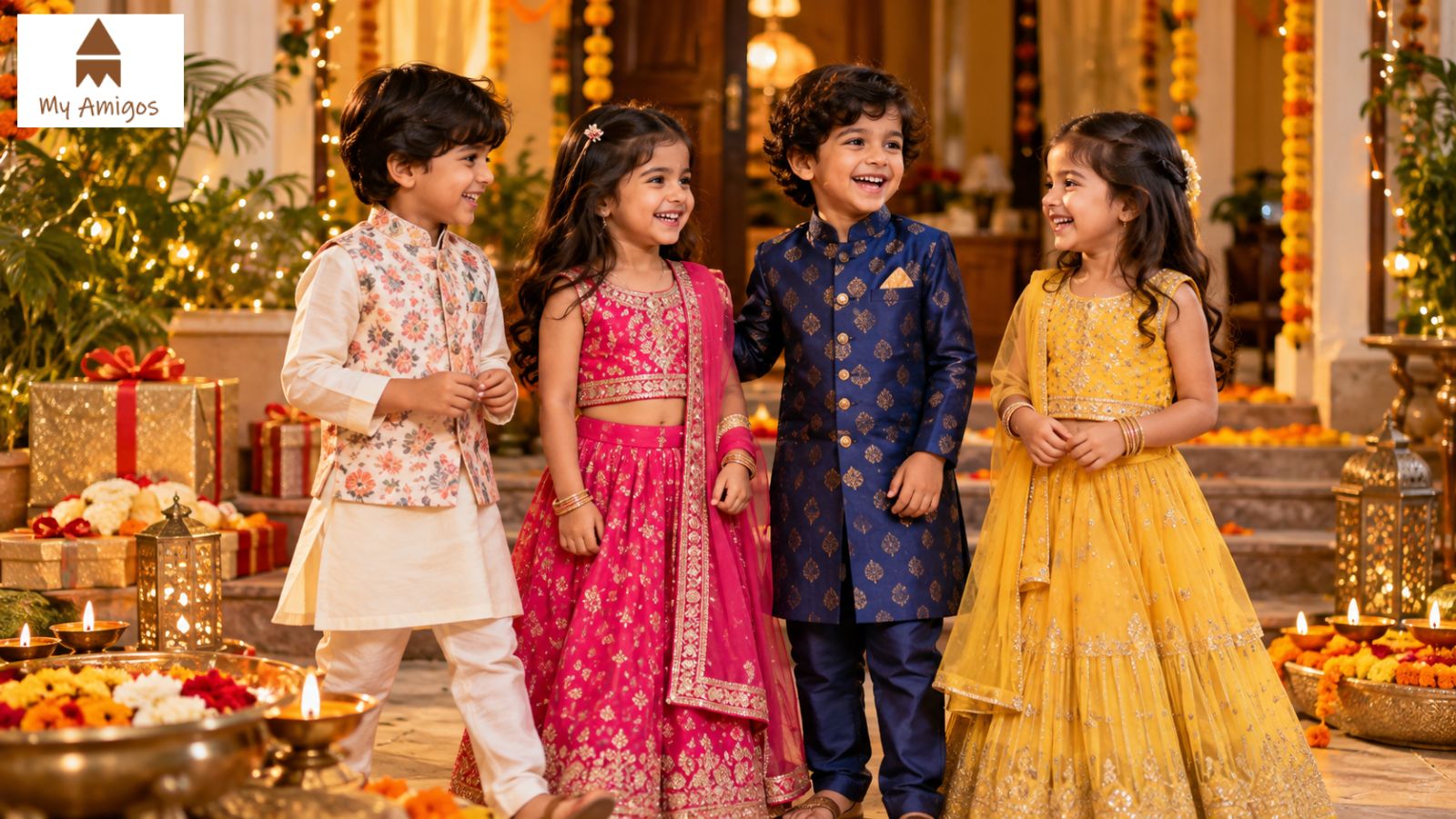
Diwali is a wonderful occasion, which is marked by beautiful lighted diyas, delicious sweets, lovely rangolis, and lots of family get-togethers. Wearing ethnic Indian clothing is something that has always made the kids feel connected with Diwali festivities. However, selecting the perfect ethnic wear for kids on Diwali is not an easy job for parents. Stiff collars, scratchy sequined borders, and heavy patterns all contribute to the creation of a disenchanted toddler.
Modern festive kids’ ethnic wear now takes the best of both worlds—real cultural traditional style, along with everyday comfortable wear.
Whether it’s for a boisterous toddler or a preteen who likes to keep up with their friends, light and breathable fabrics allow them to dance joyously and strike a pose for the cameras!
With this incredible kids’ ethnic wear guide, we have listed some Diwali outfit ideas for kids that you can explore this festive season—from pretty little girl dresses to smart little boy attire, comfy toddlers’ ethnic wear, and accessories that help create a fabulous all-day look. Here’s our ultimate guide to kids’ ethnic wear for Diwali.
Kids’ festive ethnic wear in India, as well as across the Indian diaspora, has come a long way from the days when the only options were ‘small adult-sized clothes”. The days of making toddlers wear heavy brocade or scratchy net sarees that look beautiful and in pictures but had the child wriggling uncomfortably are thankfully over. Traditional clothing has now been updated with current trends.
Today, there is a marked shift toward comfort-first construction, with designers using stretch cotton for kurtis, tagless necklines, and soft inner linens. Indian children’s clothes today use breathable fabrics like crushed silk, cotton georgette, and organic linen. So when you choose smart ethnic kids’ wear, you know your toddler will be comfortable during pujas, family gatherings, dinner parties, and night-long sparkler fun!
When it comes to little girls’ festive ethnic wear, the aim is to blend traditional style with comfort and mobility. Here are the popular categories to choose from:
Like all other grand celebrations, the traditional lehenga choli is one of the most popular attires to be worn during Diwali. Choose light fabrics such as cotton, georgette, and blends of silk and cotton, which facilitate free movement. Cotton lehengas with prints are a good option, along with the A-line frock-style lehengas, which have a little bit of ethnic detailing done on them. For the more formal but still comfortable attire, you can try the silk cotton lehenga choli.
Wide-legged trousers have now become the most loved garment for little girls. This is because these trousers provide the charm of a skirt but without any restrictions. Go for a cropped kurti with a block-printed sharara in colours that appeal to your child. The Sharara has a beautiful Gota Patti border at the bottom for added detailing. Indo-western crop tops are quite popular these days. You can pair them with palazzo pants that have been cut for ease of movement.
Anarkali is a very popular Indian celebration wear. For an elegant ethnic style, there is nothing better than the Anarkali suit. Full-length Anarkali suits or even knee-length Anarkali suits in soft material like rayon or cotton-silk blends will ensure that the child moves around easily. Tiered Anarkali in cotton is ideal for toddlers in warmer regions. Adding a bit of stretch in the kurti will allow them to sit and lie down comfortably without affecting the pleats. You could also pair a kurti with palazzo pants for a fusion style that could be worn even after festivals are over.
Boys’ cultural fashion has expanded far beyond simple plain pyjamas. Modern boys’ outfits feature rich textures, playful prints, and comfortable cuts:
A well-tailored cotton or silk-blend kurta-pyjama set is an essential staple for every boy’s festive wardrobe.
Layering an embroidered or digitally printed Nehru (waistcoat) jacket over a solid kurta instantly elevates a basic outfit into a formal evening look.
For younger, active boys who love to run, rigid trousers can feel restricting.
Dressing infants (0–24 months) for Diwali requires a strict “comfort-first” approach. Delicate baby skin reacts quickly to rough materials, so traditional attire for babies must focus entirely on soft fabrics and easy closures:
Understanding fabrics and colour combinations helps you make smart buying decisions tailored to the time of day and climate. Festive dresses for girls and boys should be chosen following this.
| Time / Setting | Best Recommended Fabrics | Trending Colour Palette |
| Daytime Puja & Family Visits | Pure Cotton, Mulmul, Linen, Rayon Slub | Mint, Powder Blue, Blush Pink, Peach |
| Evening Party & Lakshmi Puja | Silk, Cotton, Georgette, Chanderi, Lightweight Silk | Royal Blue, Emerald, Mustard Yellow, Ruby |
| Late Night Celebrations | Soft Cotton-Silk, Printed Chiffon | Metallic Gold, Copper, Deep Purple, Teal |
Avoid these frequent pitfalls when selecting festive outfits for your children:
For festive dresses for girls and boys, follow the styling guide.
Plan Two Outfit Changes: Use breathable cotton ethnic outfits during daytime for ceremonies, cooking, and playing outside while saving silk or embroidered sets for evening photography sessions and Laxmi Puja.
Check the Inner Lining: Always ensure that the inner layer of embroidery is made of delicate cotton lining to prevent irritation on your child’s body.
Opt for Anti-Slip, Cushioned Footwear: Always pair your ethnic outfit with soft mojaris, padded flats, or canvas shoes to prevent blisters and slips on smooth floors.
Coordinate Family Colours: Ensure the whole family wears similar colour accents so that you can click beautiful memories together.
Make use of this step-by-step guide to stock up on festive outfits for your child without breaking a sweat.
What to do: Measure your child’s chest, waist, shoulder breadth, and length.
When: 4 to 6 weeks before
Why: To ensure that you get the right size when ordering online
What to do: Buy your child’s ethnic outfit from a reliable seller.
When: 3 to 4 weeks before Diwali
Why: This allows you ample time to adjust your child’s outfit at home.
What to do: Test the outfit by making your child wear it for 20 minutes at home.
When: 1 to 2 weeks before
Why: This ensures that the outfit is not itchy or tight.
Dressing up for Diwali should be a fun activity for your child and you. Ensure that they have a good time in breathable cotton ethnic wear by shopping wisely and selecting modern and comfortable ethnic outfits. Your children will have a fantastic time during the festival of lights. So, kids’ ethnic wear for Diwali should be selected considering comfort and style.
The best materials include pure cotton, cotton-silk mix, rayon, and georgette with cotton linings.
Ensure that the lehenga has an elastic waistband. Always choose skirts with a soft inner cotton lining. Avoid lehengas with a metallic hardener (can-can netting), and opt for soft-printed or light Gota Patti.
Yes, most pre-stitched dhotis come with an elastic waistband, making them ideal for energetic kids who do not want to bother with how their outfit drapes. They also give a traditional yet modern look.
It is advisable to shop for kids’ festive wear 3 to 4 weeks before Diwali.
It is a good idea to have an extra set of clothes in case of messes. This way, you can avoid getting the outfit dirty during meals, while playing with sparklers, and when visiting friends and family. You can also invest in a festive bib for toddlers to avoid staining silk kurtis or lehengas during meals