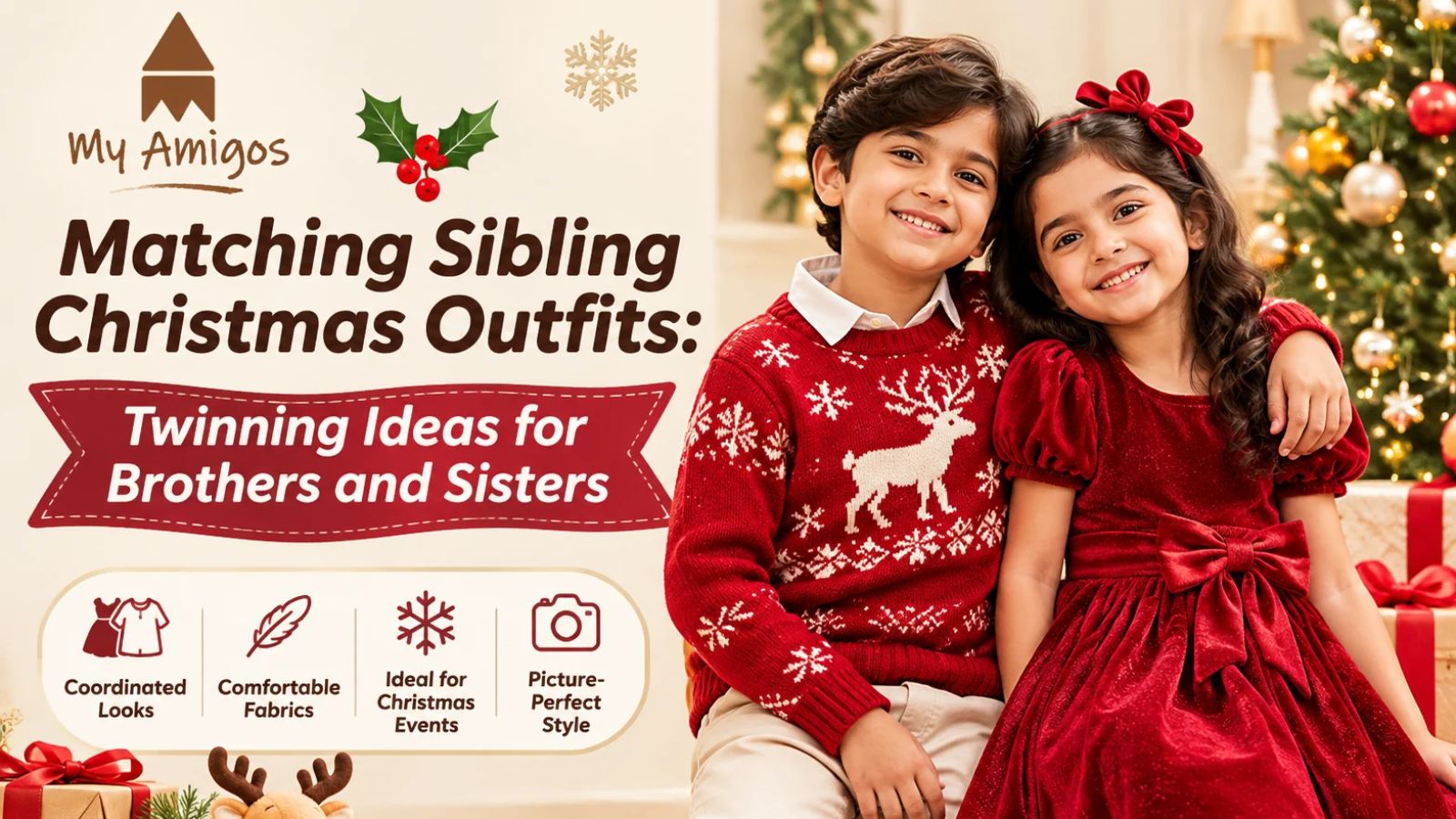
Every December, parents face the same small puzzle. You want your children to look festive and picture-perfect together. But your daughter wants a twirly dress, your son refuses anything “too fancy”, and the youngest just wants to be comfortable. Picking christmas dresses for kids in India gets tricky when you’re dressing two or three children at once.
That’s why Sibling Christmas Outfits have become such a strong trend. Twinning doesn’t mean identical clothes. It means coordinated looks that tell the world, “We belong together.” Done well, the look feels warm, joyful and makes for great photos.
In this guide, our team at My Amigos shares what we have learned from helping families put together kids christmas outfits India loves. You’ll find twinning ideas, fabric advice for Indian weather, mistakes to avoid and styling tips that actually work.
Christmas in India now goes well beyond church and family dinners. Schools host celebrations, housing societies throw parties, and families plan festive photoshoots at home. Each event calls for a fresh look, and siblings often attend them together.
Matching outfits solve a real problem for parents. You make one style decision instead of three. Your children look polished in group photos. And kids love it too. Younger siblings feel proud dressing like an older brother or sister, and older kids enjoy the attention a coordinated look brings.
This shift has shaped seasonal kids fashion across the country. Parents now want sets that look good together but still suit each child’s age, gender and personality.
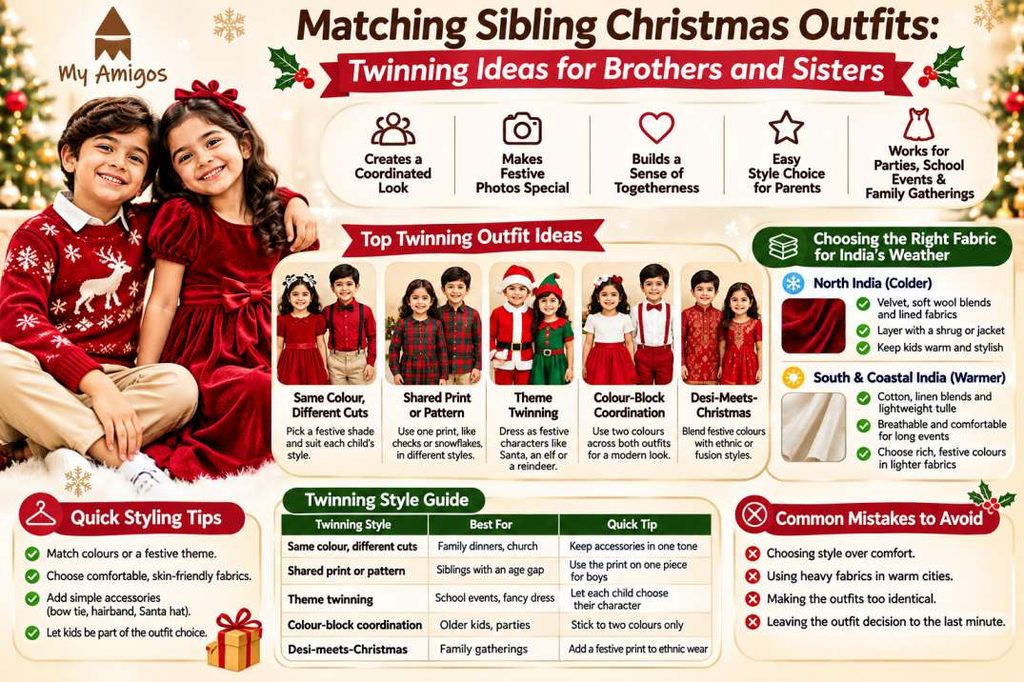
The best twinning looks link the outfits without copying them. Here are five approaches our styling team recommends most often.
This is the easiest place to start. Pick one festive shade, like deep red, emerald green or ivory. Dress your daughter in a flared dress and your son in a shirt with trousers in the same colour. The shared shade ties them together, and each child still gets clothes that suit them.
Choose one print, like checks, snowflakes or tiny reindeer, and use it in different ways. A girl can wear it as a full dress. A boy can wear it as a shirt, a waistcoat or a bow tie. This works really well for families with a big age gap between children.
Pick a story and dress the kids as its characters. One child becomes Santa, another becomes an elf or a reindeer. This style suits school celebrations and fancy dress events because it feels playful rather than formal.
Use two colours across all the children. For example, one sibling wears red with white details, and the other wears white with red details. The look feels modern and fresh, especially for older kids who don’t like matching exactly.
Many Indian families love blending traditions. A boy in a red kurta with a festive print and a girl in a matching red frock or ethnic-fusion dress make a charming pair. This approach suits family gatherings where elders appreciate a traditional touch.
| Twinning Style | Best For | Quick Styling Tip |
|---|---|---|
| Same colour, different cuts | Family dinners, church | Keep accessories in one metal tone |
| Shared print | Siblings with a big age gap | Use the print on one piece only for boys |
| Theme twinning | School events, fancy dress | Let each child choose their character |
| Colour-block | Older kids, parties | Stick to two colours only |
| Desi-meets-Christmas | Family gatherings | Add a festive print to ethnic wear |
A beautiful outfit fails if your child spends the whole evening tugging at it. Comfort decides whether kids smile in photos or ask to change after ten minutes.
India’s December weather varies a lot from region to region, so your choice of christmas dresses for kids in India should match your city’s climate.
Cities in the north get cold by late December. Velvet, soft wool blends and lined fabrics work well here. Layer a dress with warm tights and a matching shrug or jacket. For boys, a festive sweater over a collared shirt keeps them warm and smart.
Warmer cities need breathable fabrics. Cotton, soft linen blends and lightweight tulle keep kids cool during long parties. Skip heavy velvet. Instead, choose rich festive colours in light fabrics to get the same holiday feel.
| Fabric | Comfort Level | Best Climate | Watch Out For |
|---|---|---|---|
| Cotton | Very high | Warm regions | Can crease easily |
| Velvet | Medium | Cold regions | Heavy for toddlers |
| Tulle with cotton lining | High | All regions | Unlined tulle scratches skin |
| Wool blends | Medium | Cold regions | Check for itchy fibres |
| Linen blends | High | Warm regions | Choose softer weaves for kids |
At My Amigos, we design our kids christmas outfits India families pick with soft inner linings and child-friendly stitching. Kids move, sit, run and dance, and their clothes should let them do all of it.
Good planning saves you from last-minute stress. Follow these steps for a smooth festive season.
Even well-planned looks can go wrong. Here are the mistakes we see most often.
Our team has helped many families plan their festive looks. These tips come up again and again.
Here’s an example from a typical family. Imagine a seven-year-old girl and a three-year-old boy getting ready for a society Christmas party. The girl wears an emerald dress with a soft tulle skirt. Her brother wears a cream shirt with an emerald bow tie and matching shorts. They don’t wear the same outfit, but anyone can see they’re a pair. Both stay comfortable through hours of games and dancing.
The best Sibling Christmas Outfits balance three things: coordination, comfort and each child’s personality. Choose a shared colour, print or theme, and then adjust the design for each child’s age and style. Match the fabric to your city’s weather and plan ahead for every event.
When you choose christmas dresses for kids in India, think beyond one night. Pick pieces your children love wearing and can wear again. Explore the My Amigos Christmas collection to find coordinated kids christmas outfits India families love for every celebration this season.
Start with one shared colour or print, then pick designs that suit each child. A girl can wear a flared dress, while a boy wears a shirt with trousers or shorts in the same shade. You can also link the outfits through small details like a matching bow tie and hairband. This approach looks coordinated and lets both children feel comfortable in clothes that suit their style and age.
The right fabric depends on where you live. In colder northern cities, velvet, wool blends and lined fabrics keep children warm during evening events. In warmer southern and coastal cities, cotton and soft linen blends work much better because they let skin breathe. If you choose tulle, always check for a soft cotton lining underneath. Unlined tulle can scratch delicate skin and make young children restless during long parties.
Yes, but avoid identical designs. Older children, especially pre-teens, often feel awkward in outfits that look babyish. Instead, use a shared print or colour in age-appropriate cuts. For example, an older sister can wear a smart dress in a checked print, while a toddler brother wears the same print as a small waistcoat. This keeps the twinning theme alive and respects each child’s sense of style and comfort.
Choose separates instead of single-use costumes. A festive top, a plain skirt and a smart pair of trousers can mix into several looks. Wear the full coordinated set for the family photoshoot, then pair the top with jeans for a casual party. Add a different accessory each time to refresh the look. This approach saves effort during a busy season and gives each outfit much more value.
Involve them in the decision. Show each child two or three options and let them choose their favourite. Children happily wear what they pick themselves. Also, test the outfit at home a few days before the event to check comfort, fit and footwear. Remove any scratchy tags or stiff trims. When kids feel included and comfortable, they wear their outfits proudly and enjoy every moment of the celebration.