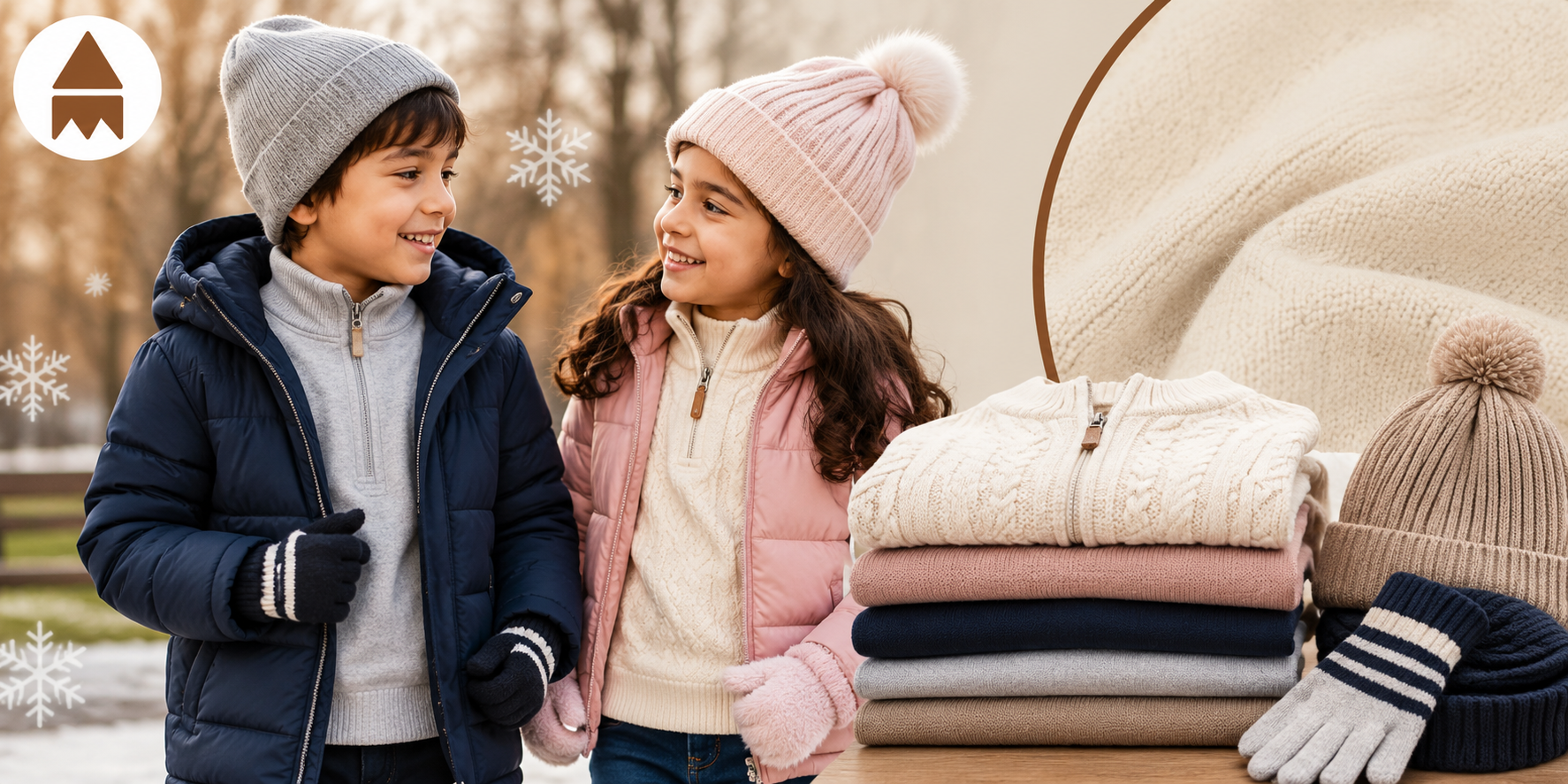
Winter warmth for kids isn’t solved by piling on thick clothing or loose outerwear. Instead, effective protection emerges through materials allowing air flow, thin yet efficient thermal barriers, along with a sequence of garments designed around ease of motion. What matters most shows up in how freely they play while staying heated. These practical winter clothing tips for kids help parents create balanced winter wardrobes that protect children from cold weather without causing overheating or discomfort.
Winter wear at My Amigos focuses on ease of motion, gentle textures, because climate shifts matter. Since kids keep moving through cold seasons, garments need to balance body heat yet stay flexible. Bulky layers tend to limit how freely arms swing, hold in too much warmth, leading to restlessness at school, on buses, or when stepping inside from snow.
Thoughtfully selected kids winter wear should support daily routines, festive outings, travel, and evening events without compromising kids comfort. From breathable inner layers to structured outerwear, the goal is to create warmth through smart layering rather than excessive bulk.
Most winter clothing emphasizes bulk, yet ours delivers light insulation without sacrificing heat retention. Because movement matters, each piece allows airflow while adapting to shifting conditions. Starting with how fabric moves on skin, these layers keep wear steady across changing environments. Rather than trap sweat, they respond dynamically, balancing protection with ease during motion.
Starting with lightweight pieces helps children stay warm without bulk. Because each thin item adds insulation, movement stays easy and body heat builds gradually. When garments work together like this, comfort improves through better temperature control. Layering also adjusts quickly as conditions change outdoors.
Heavy fabrics can cause sweating and discomfort indoors. We focus on Breathable Fabrics for Kids in Winter that regulate airflow while retaining warmth.
Running, sitting, bending – these movements must feel natural for kids. A winter outfit that balances shape with give helps avoid tightness and extra bulk.
Across India, cold seasons shift differently by area. When mornings stay soft but nights draw chill, our approach to dressing fits well. Though weather swings happen, layering keeps pace – responding without effort.
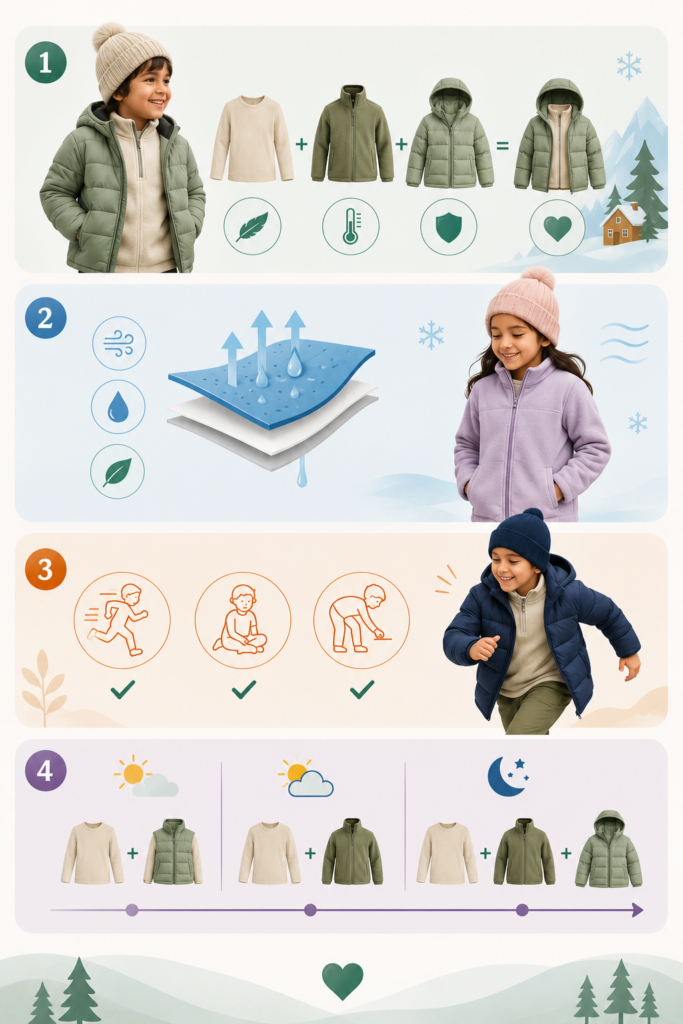
Different winter activities require different levels of warmth and layering. Understanding how children spend their day helps parents choose practical winter combinations.
Besides staying warm, winter clothes worn every day need to let air move through them, feel light on the body, yet stay simple to adjust when needed. Moving from chilly outside spaces into heated classrooms is common during school days.
Once kids move indoors, thick coats can become too warm. Wearing layers allows adjustments based on how hot or cold it gets.
Starting with comfort, soft cotton or mixed-fiber underlayers hold warmth while letting extra heat escape. These materials assist steady body climate by balancing insulation and breathability hour by hour.
Built for motion, lightweight sweaters trap warmth without restricting activity. Hoodies offer coverage that moves when you do.
Practical outerwear helps children adjust quickly between indoor and outdoor environments without discomfort.
These combinations improve kids cold protection while maintaining comfort during long school hours and travel.
For moving around outside, a bit more padding helps – yet freedom to stretch matters just as much. When nights draw in, journeys unfold, or children run across play areas, outfits should hold heat without holding back motion.
When kids move around, extra layers can cause them to get too warm. Dressing wisely for cold weather helps avoid this without sacrificing heat retention.
Though lightweight, these jackets resist wind thanks to their reinforced shells. Their design stops chill from penetrating while staying slim enough to move freely.
Strategic layering traps heat more efficiently than thick standalone garments.
Softness matters in scarves, yet weight must stay low. Caps follow the same rule – gentle on skin, light in feel. Gloves, while worn long, ought not chafe; smooth texture helps. Fabric choices influence comfort, so bulk is best avoided. Each item, though different in shape, shares a need for ease against the body.
Well-designed winter wear for kids in India should feel adaptable rather than restrictive.
Winter festive dressing requires warmth without hiding the overall outfit structure. Ethnic wear and occasion clothing should remain elegant while still supporting seasonal comfort.
What matters is how layers blend with the overall look – bulkiness distracts. A sense of balance keeps the outfit cohesive without weighing it down.
These provide warmth while preserving the shape of festive clothing underneath.
Invisible insulation layers help maintain warmth without changing the garment silhouette.
During events like parties or trips, the even weight of the material keeps it flexible. Family get-togethers won’t restrict movement thanks to its smooth drape. Because the textile distributes mass uniformly, discomfort stays minimal on the go.
This approach allows children to remain comfortable while maintaining polished festive styling.
Comfort during cold months hinges on proper fit. When garments squeeze too tightly, air cannot circulate. Loose pieces create gaps that let warmth escape. Each layer must balance snugness without compression.
Closest to the body, base layers need breathability, moisture control, because comfort depends on staying dry. Softness matters just as much, since irritation can build during movement. Temperature stays balanced when fabric works with the body, not against it.
Cotton-rich blends often work best for Indian winter conditions because they maintain softness while allowing airflow.
Mid-layers create insulation by trapping body heat. Sweaters, lightweight pullovers, and fleece-lined pieces provide adaptable warmth without excessive heaviness.
They should fit comfortably over inner layers while remaining easy to remove if temperatures rise.
Outer layers protect children from wind and cooler outdoor temperatures. However, excessively padded jackets can limit mobility and cause overheating.
Modern lightweight outerwear focuses on insulation efficiency rather than unnecessary thickness.
Winter clothing should never feel restrictive. Slightly relaxed silhouettes allow better layering while supporting natural movement throughout the day.
This becomes especially important during school routines, travel, and outdoor activities.
Fabric selection determines how effectively winter clothing balances warmth, softness, and breathability. The right materials help children remain comfortable across changing temperatures.
Cotton remains one of the best foundation materials for mild Indian winters. It provides softness, breathability, and moisture control for everyday comfort.
Cotton-rich layers are especially suitable for indoor wear and daytime activities.
Thermal fabrics and fleece linings improve insulation while remaining lightweight. These materials help retain warmth without creating excessive heaviness.
They work well for evening outings and colder weather conditions.
Knitted materials provide natural flexibility and warmth. Their stretch-friendly construction supports active movement while maintaining insulation.
These fabrics are ideal for sweaters, pullovers, and layered winter outfits.
Modern blended materials improve durability, flexibility, and airflow management. These fabrics prevent overheating while supporting extended wear comfort.
They are particularly useful for layering kids’ clothes effectively.
At My Amigos, winter dressing is designed around comfort engineering rather than bulky styling. Children require warmth that adapts to movement, lifestyle, and seasonal transitions.
We prioritise insulation efficiency instead of heavy construction, allowing children to move comfortably throughout the day.
Every layer is designed to regulate airflow and temperature while maintaining softness against the skin.
Relaxed fits and flexible construction ensure clothing supports active routines without stiffness.
Our approach considers varying regional winter conditions across India rather than extreme cold-weather assumptions.
We use materials selected for warmth, softness, durability, and breathability instead of relying solely on thickness.
Balanced sizing helps parents layer outfits comfortably without overcrowding or restriction.
Winter garments are constructed to maintain structure, softness, and comfort even after frequent washing and seasonal use.
Layer lightweight breathable fabrics instead of using bulky jackets. Smart layering improves warmth while maintaining comfort and movement.
Cotton blends, fleece-lined fabrics, and knitted materials provide balanced warmth, softness, and breathability for Indian winter conditions.
Usually three lightweight layers work best — a breathable base layer, insulating mid-layer, and protective outer layer.
Breathable fabrics prevent overheating, sweating, and discomfort while maintaining consistent warmth during indoor and outdoor transitions.