Choosing products for children is rarely just about appearance. Parents want clothing that feels comfortable, toys that encourage meaningful play, and products that can handle everyday use. When comparing a kids clothing and handcrafted toy brand in India, it is worth looking beyond attractive photographs and seasonal trends. Fabric, sizing, construction, age suitability, safety information, craftsmanship, maintenance and the child’s own needs all matter. A thoughtful approach can help families choose Kids Clothing and Handcrafted Toys that are practical as well as beautiful.
Indian children’s fashion has changed considerably. Parents today have access to everything from everyday cotton outfits to occasion wear, coordinated sets and contemporary designs influenced by global fashion. At the same time, there is growing interest in products that retain a connection with Indian craftsmanship and thoughtful production.
Indian kids fashion does not have to mean choosing between traditional and modern styles. A well-designed children’s outfit can use familiar Indian textiles, colours or detailing while still providing the freedom of movement children need for playing, running and exploring.
The same principle applies to toys. A handcrafted toy can bring texture, character and individuality to a child’s play space while complementing the family’s preference for thoughtfully made products.
The key is to consider function before appearance. A beautiful outfit that is uncomfortable or difficult to wash may spend more time in the wardrobe than on the child. Similarly, a charming toy is not necessarily appropriate for every age group.
Online shopping makes visual presentation important, but photographs cannot tell you everything. Before buying, look carefully at the product description, size information, material details, age recommendations and care instructions.
For clothing, check whether the garment is designed for everyday movement. For toys, look for clear information about intended age, materials and safe use. If important information is missing, it is reasonable to ask the seller before placing an order.
This habit is particularly useful when buying from a smaller or independent brand. A good product description should help you understand what you are actually purchasing rather than relying entirely on styling photographs.
Children spend much of their day moving. They sit on floors, climb furniture, play outdoors, eat snacks, get messy and frequently change positions. Kids clothes therefore need to work with a child’s routine rather than simply look good in a photograph.
For younger children, soft fabrics and comfortable construction can be particularly important. Waistbands, seams, fastenings and labels should not create unnecessary irritation. For active older children, garments should allow sufficient movement without feeling restrictive.
When comparing clothing, consider:
Parents should also consider how frequently a garment is likely to be worn. A special-occasion outfit may have different priorities from clothing intended for school, play or everyday family outings.
Baby clothes require particular attention because babies spend a great deal of time lying down, being carried and changing position. Clothing should make routine tasks such as nappy changes easier rather than more complicated.
Parents may find practical features such as accessible openings, comfortable necklines and easy-to-manage fastenings useful. The garment should also suit the weather and the child’s environment. Overdressing a baby simply because an outfit looks attractive may make the clothing less practical.
Sizing also deserves attention. Buying significantly oversized clothing may seem economical because the child can “grow into it”, but very loose garments can be inconvenient or unsuitable for certain activities. It is usually better to check the brand’s measurements rather than relying only on a general age label.
A fabric can feel excellent when new but become difficult to maintain if it requires unusually complicated care. Parents with busy routines may prefer garments that can be washed and cared for easily.
This does not mean every children’s garment needs to be machine washable. Delicate occasion wear may reasonably require special care. The important thing is understanding the maintenance commitment before purchasing.
A useful question is: Will I realistically care for this garment in the way the brand recommends? If the answer is no, another option may provide better value even if its initial price is similar.
The search for designer cloths for kids online can produce a huge range of options, from independent Indian labels to larger fashion retailers. Online shopping makes comparison easier, but it also requires more attention to product information.
Do not judge quality only by the number of photographs or the sophistication of the website. Look for specific information about fabrics, measurements, construction, care and returns. A detailed product description gives you a better basis for comparison than marketing language alone.
If a garment is described as premium, handmade or designer, consider what that description actually means. Is there detailed information about the material? Is the construction explained? Are measurements available? Does the product have a clear care guide? These practical details are more useful than a label by itself.
The phrase premium kids clothing in India can refer to several different things. Sometimes it describes higher-quality materials or construction. In other cases, it may refer to design, limited production, craftsmanship or a particular brand position.
Price alone does not establish quality. A more expensive garment should still be evaluated according to its fabric, stitching, comfort, durability, design and usefulness.
For example, a carefully constructed cotton outfit that remains comfortable after repeated washing may provide more practical value than an expensive garment that is difficult to maintain. Likewise, a thoughtfully designed festive outfit can be worthwhile if it is comfortable enough to be worn for several hours and can be stored and reused.
The best approach is to connect the price with tangible characteristics rather than assuming a higher price automatically means a better product.
Kids Clothing and Handcrafted Toys have something important in common: both should be selected with the child in mind rather than the product trend.
With clothing, consider the child’s age, movement, climate, routine and personal comfort. With toys, consider developmental stage, intended use, durability and supervision requirements.
Handcrafted products can also have natural variations. Small differences in stitching, fabric placement, colour or finish may occur when products are made or finished by hand. These differences are not automatically defects. However, structural problems, loose components or poor finishing should not be dismissed simply because an item is described as handmade.
Safety information deserves particular attention when buying children’s toys. In India, toys covered by the Toys (Quality Control) framework are subject to applicable BIS requirements. BIS lists standards including IS 9873 parts covering mechanical and physical properties, flammability, migration of certain elements and other toy safety aspects.
For parents, the practical lesson is straightforward: check the product’s recommended age, instructions and safety information. Do not assume that a toy is suitable for a baby simply because it looks soft or simple.
Small detachable parts, cords, fasteners and other features can present different risks depending on the child’s age and how the product is used. BIS guidance also recognises age-related requirements and testing for reasonably foreseeable use and abuse.
For very young children, supervision remains important even when a product is designed for their age group.
A handcrafted toy does not need to be complicated to be valuable. Simple toys can encourage children to create their own stories, practise imaginative play and interact with parents or siblings.
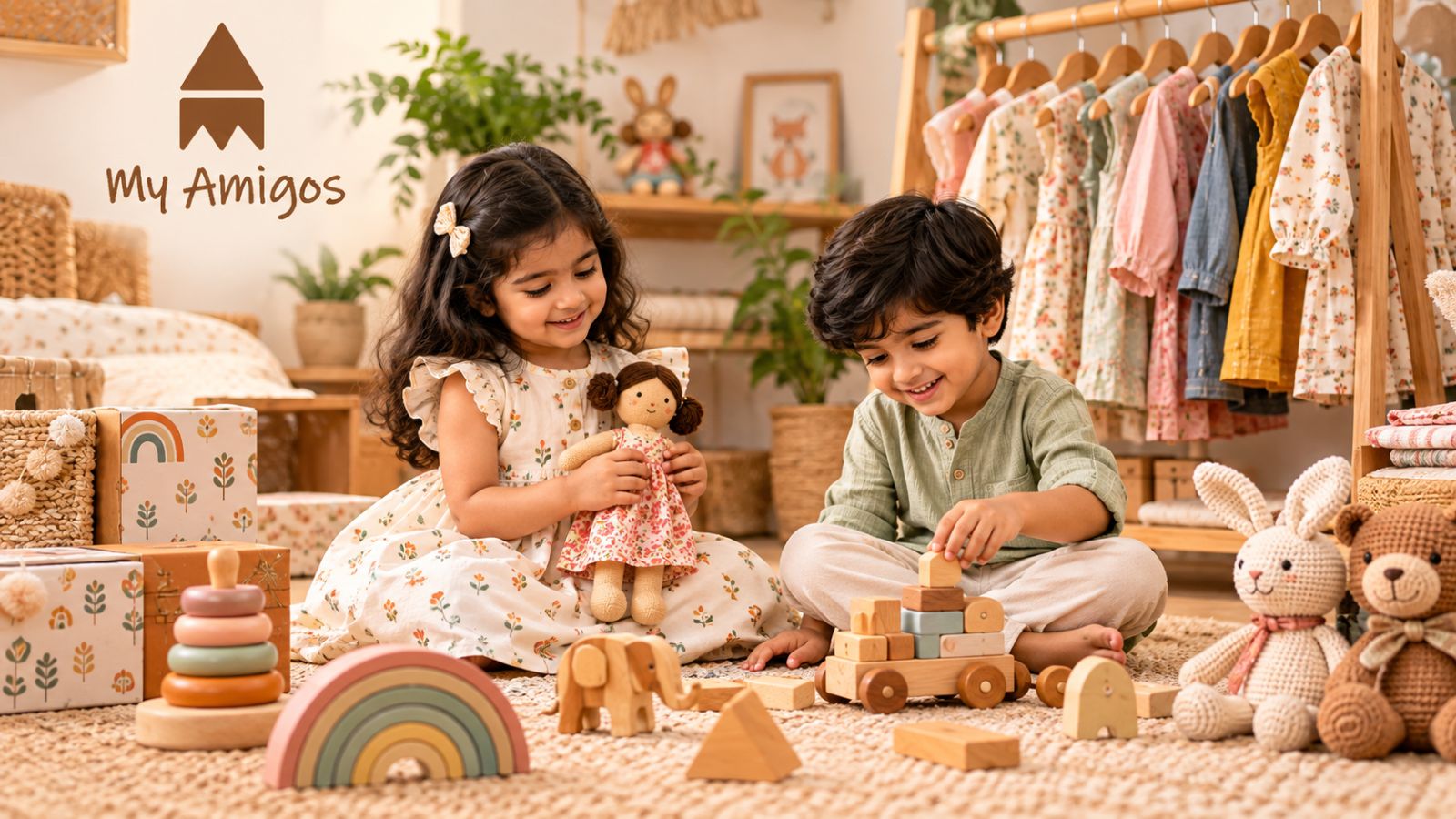
For example, a fabric doll can become part of pretend play, while a simple wooden or textile-based object can be incorporated into games that change as the child grows. The value comes partly from what the child does with the toy rather than how many functions the product has.
This is one reason parents may find handcrafted toys appealing. They can feel less disposable and may become familiar objects associated with particular stages of childhood.
However, parents should still evaluate the actual product rather than assuming “handcrafted” means safer or better. Craftsmanship and safety need to be considered separately.
Children can be surprisingly hard on their belongings. Clothing encounters food, outdoor dirt, frequent washing and constant movement. Toys may be dropped, carried around, placed on the floor and subjected to imaginative play that the designer never anticipated.
Before buying, consider how the item will realistically be used. A delicate toy may be suitable for supervised play but inappropriate for a toddler who frequently throws objects. Similarly, an intricate outfit may work for a celebration but not for an active afternoon.
Durability should therefore be assessed in context. The right product is not necessarily the strongest or most expensive one. It is the product whose construction and intended use match the child’s routine.
A designer kids wear brand should be evaluated on more than styling. Parents can look at the consistency of product information, size guidance, material transparency, care instructions and customer support.
A reliable online buying experience should make important information easy to find. Before ordering, check:
Reviews can also be useful, particularly when they describe practical experiences such as fit, fabric feel, washing performance or actual size. Look for patterns rather than relying on one extremely positive or negative comment.
A polished logo and attractive packaging can create a strong first impression, but they do not tell you how well a garment is constructed or how suitable a toy is for a particular child.
Look for evidence in the product itself. Detailed descriptions, clear photographs, useful measurements and transparent policies give shoppers more information with which to make a decision.
This is especially relevant when comparing products that appear similar. Two outfits may have comparable designs but differ substantially in fabric weight, stitching, finishing or care requirements.
One of the appealing aspects of buying from an Indian brand is the opportunity to discover products influenced by local design traditions, textiles, colours and craftsmanship. This can give children’s products a distinct character without requiring them to look old-fashioned.
For families interested in supporting thoughtful production, it can also be useful to learn about how a brand develops its products. Does it explain where materials come from? Does it provide information about artisans or production methods where relevant? Does it describe why a particular material or design was selected?
These details do not automatically prove quality, but they help shoppers understand the product and the brand behind it.
Sustainability is often presented as an all-or-nothing decision, but parents can approach it practically. Buying fewer, more useful garments can reduce unnecessary consumption. Choosing clothing that can be worn across several occasions can make a wardrobe more versatile.
The same principle applies to toys. A toy that remains interesting over time may have more practical value than one that provides a few minutes of novelty and is quickly forgotten.
Parents can also consider whether products can be handed down, reused or repurposed. A durable children’s garment with a timeless design may remain useful even when one child outgrows it.
One common mistake is buying according to age alone. Age labels are useful starting points, but children of the same age can have different heights, proportions, abilities and preferences. Measurements and product-specific guidance can provide a better fit.
Another mistake is prioritising photographs over function. A beautifully styled outfit may not be comfortable for an entire day. A visually appealing toy may contain features that make it unsuitable for a younger child.
Parents may also buy too many products at once. Children’s needs change quickly, so building a smaller collection of useful clothing and age-appropriate toys can sometimes be more practical than purchasing large quantities.
Before placing an order, ask yourself:
These questions take only a few minutes but can prevent many common purchasing mistakes.
The most useful approach is to think like a practical parent rather than a trend-focused shopper. Start with the child’s routine. If your child spends most days playing outdoors, prioritise comfortable and easy-care clothing. If your toddler enjoys imaginative play, look for toys that support that type of interaction while remaining appropriate for their age.
For babies, convenience matters. For school-aged children, durability and movement may become more important. For older children, personal style and independence may influence purchasing decisions more strongly.
There is no single definition of the perfect children’s product. The right choice depends on the child’s age, environment, habits and the family’s priorities.
When comparing a kids clothing and handcrafted toy brand in India, it is worth understanding whether the brand appears to have a consistent philosophy behind its products. A company that treats clothing and toys as part of childhood rather than simply as fashion products may pay closer attention to comfort, usability, design and age suitability.
My Amigos can be considered by parents exploring children’s clothing and handcrafted products, particularly those interested in combining contemporary children’s style with thoughtfully designed products.
The important point is to evaluate individual products rather than relying solely on a brand name. Parents can explore My Amigos alongside other Indian children’s brands, comparing fabrics, sizing, craftsmanship, safety information, product descriptions and overall suitability for their child’s needs.
Choosing Kids Clothing and Handcrafted Toys is ultimately about matching products with real childhood needs. Comfortable fabrics, practical sizing, durable construction, age-appropriate toys and clear safety information matter far more than following every new trend. Indian brands offer parents an opportunity to explore contemporary design alongside local craftsmanship, but each product should still be assessed carefully.
A thoughtful kids clothing and handcrafted toy brand in India can make the shopping experience more meaningful when its products combine design with practical considerations such as comfort, usability and appropriate safety information. Parents do not need to buy everything that looks attractive. They simply need to become better at identifying products that genuinely suit their children.
For families exploring Indian children’s fashion and handcrafted products, My Amigos offers one brand option to consider. Comparing its products with other options, checking the available information and choosing according to a child’s individual needs can help make online shopping more deliberate, useful and enjoyable.
Start with the size chart rather than relying only on your child’s age. Check fabric composition, garment measurements, care instructions and the design’s suitability for movement. It is also useful to think about where the child will wear the outfit. Everyday clothing needs different characteristics from festive or occasional wear.
Some handcrafted toys may be designed for babies or toddlers, while others are intended for older children. Never assume that “handcrafted” automatically means suitable for a particular age. Check the manufacturer’s age recommendation, safety information and construction. Pay particular attention to small detachable components, cords and other features that may create risks for younger children.
Look for detailed fabric information, accurate measurements, clear photographs and useful care instructions. Reviews can provide additional insight into fit, comfort and performance after washing. A higher price does not automatically establish better quality, so compare the actual construction and practical features of different products.
Indian kids fashion includes a wide range of influences, from traditional textiles and craftsmanship to contemporary silhouettes and global trends. This creates considerable variety for parents. The most useful approach is to select pieces according to comfort, climate, occasion, durability and the child’s preferences rather than choosing something solely because it reflects a particular fashion trend.
Safety should always be the first consideration. Design, appearance and craftsmanship are important, but they should come after age suitability and safe construction. For toys sold in India that fall under applicable mandatory toy safety requirements, parents can also look for relevant BIS information and follow the manufacturer’s instructions. BIS identifies applicable Indian Standards for toy safety, including IS 9873 requirements for non-electric toys.